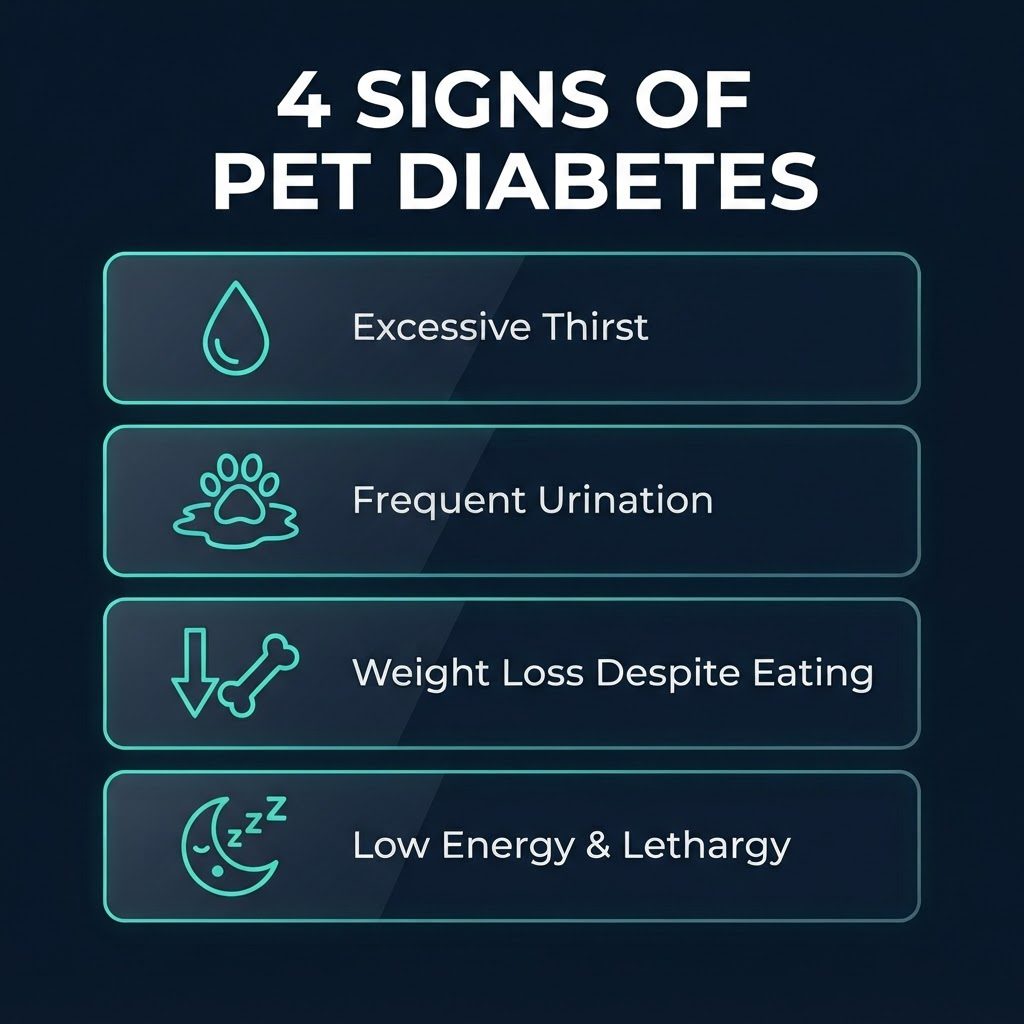
Diabetes is one of those conditions that hides in plain sight. Dogs and cats can't tell you they're drinking twice as much water as usual, so unless you're paying close attention day to day, the early signs blend into "must just be hot out" or "guess she's just thirsty today." That's part of why it matters — for a condition this manageable, way too many pets get diagnosed only after things get serious.
Here's what every pet parent should know: what insulin resistance actually is, how common it really is, what causes it, and when "keep an eye on it" needs to become "call the vet today."
What insulin resistance and diabetes actually mean
Insulin is the hormone that lets your pet's cells absorb glucose (sugar) from the bloodstream for energy. When that system breaks down, glucose builds up in the blood instead of getting used, and the body starts running on empty even while blood sugar is high.
There are two main mechanisms, and — this surprises a lot of pet parents — dogs and cats tend to get different types. In dogs, diabetes is most often Type 1: the immune system mistakenly destroys the insulin-producing cells in the pancreas, so the body simply can't make enough insulin anymore. It's usually permanent once it happens. [1]
In cats, it's the opposite story. Most feline diabetes is Type 2 — true insulin resistance, where the body still makes insulin but the cells stop responding to it properly. Obesity is the single biggest driver of this. The good news for cats: caught early, Type 2 diabetes can sometimes go into remission with weight loss and the right treatment. [1]
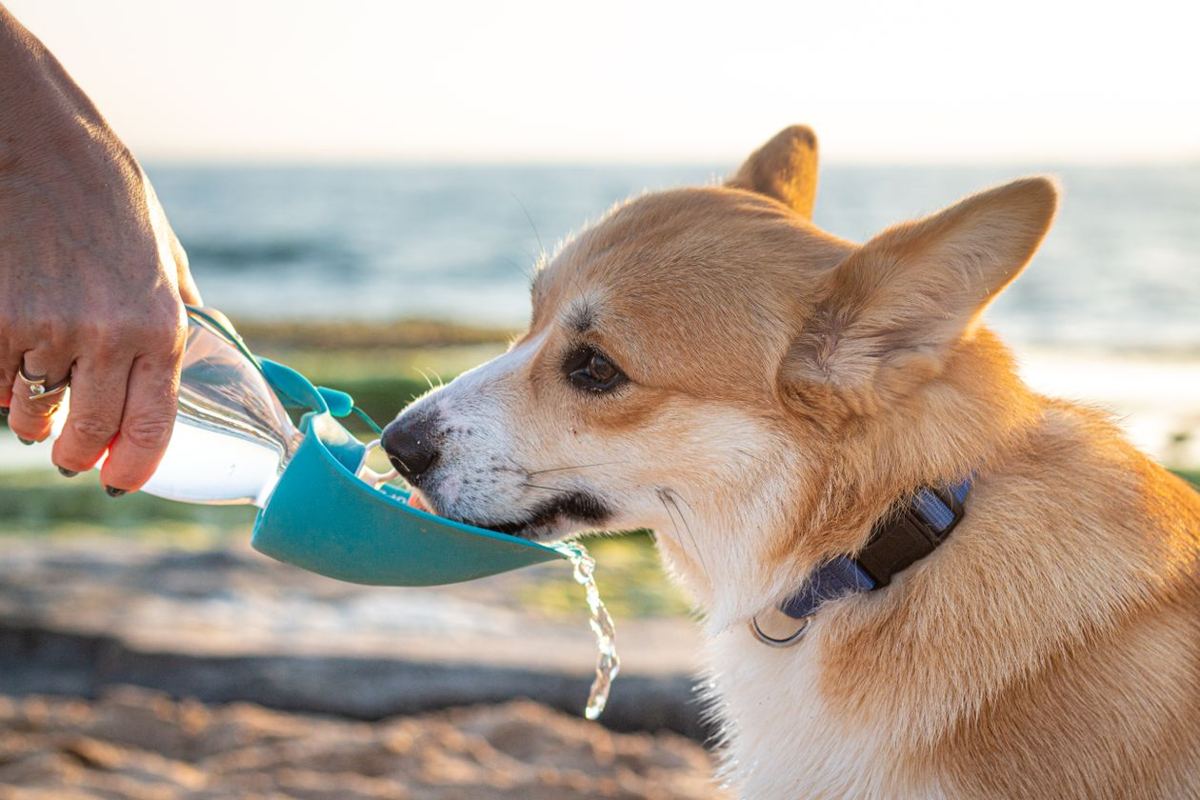
Excessive thirst is one of the earliest and most reliable warning signs in both dogs and cats.
How common is this, really?
More common than most people think. Diabetes affects an estimated 1.5% of dogs and 0.5–1% of cats. [1] Looked at over a lifetime, one 2020 estimate put it at roughly 1 in 300 dogs and 1 in 230 cats. [2] Some feline studies put the incidence even higher — as much as 1 in 100 cats in certain populations. [3]
📊 Key takeaway: Pet diabetes is on the rise — one widely cited report tracked an 80% increase in canine diabetes and an 18% increase in feline diabetes over a single decade. [2]
That last stat is the entire reason this post exists. It's usually not because the disease itself is untreatable — it's because it wasn't caught early enough, or the owner wasn't prepared for the day-to-day management once it hit an advanced stage.
What causes it
Obesity is the top modifiable risk factor for both species — it drives insulin resistance directly. [1][8] An estimated 59% of dogs and 61% of cats in the U.S. are now overweight or obese, which is a big part of why diabetes rates keep climbing. [8]
Age and reproductive status matter too — diabetes tends to show up in middle-aged to older pets, and unspayed female dogs carry extra risk. [1]
Breed genetics play a role in dogs specifically. Samoyeds, Miniature Schnauzers, Miniature and Toy Poodles, Pugs, Bichon Frises, Dachshunds, Keeshonds, Cairn Terriers, and Tibetan Terriers are all considered higher-risk breeds. [6]
Chronic pancreatitis is a major hidden cause in dogs — an estimated 28% of canine diabetes cases trace back to pancreatic damage from repeated pancreatitis flare-ups. [4]
Hormonal conditions are an underrated cause in cats — Cushing's disease and acromegaly (excess growth hormone, often from a pituitary tumor) both cause severe insulin resistance and can make a cat's diabetes very hard to control until the underlying condition is treated. [5]
Steroid medications, physical inactivity, and being kept strictly indoors also nudge risk upward, especially in cats. [1]
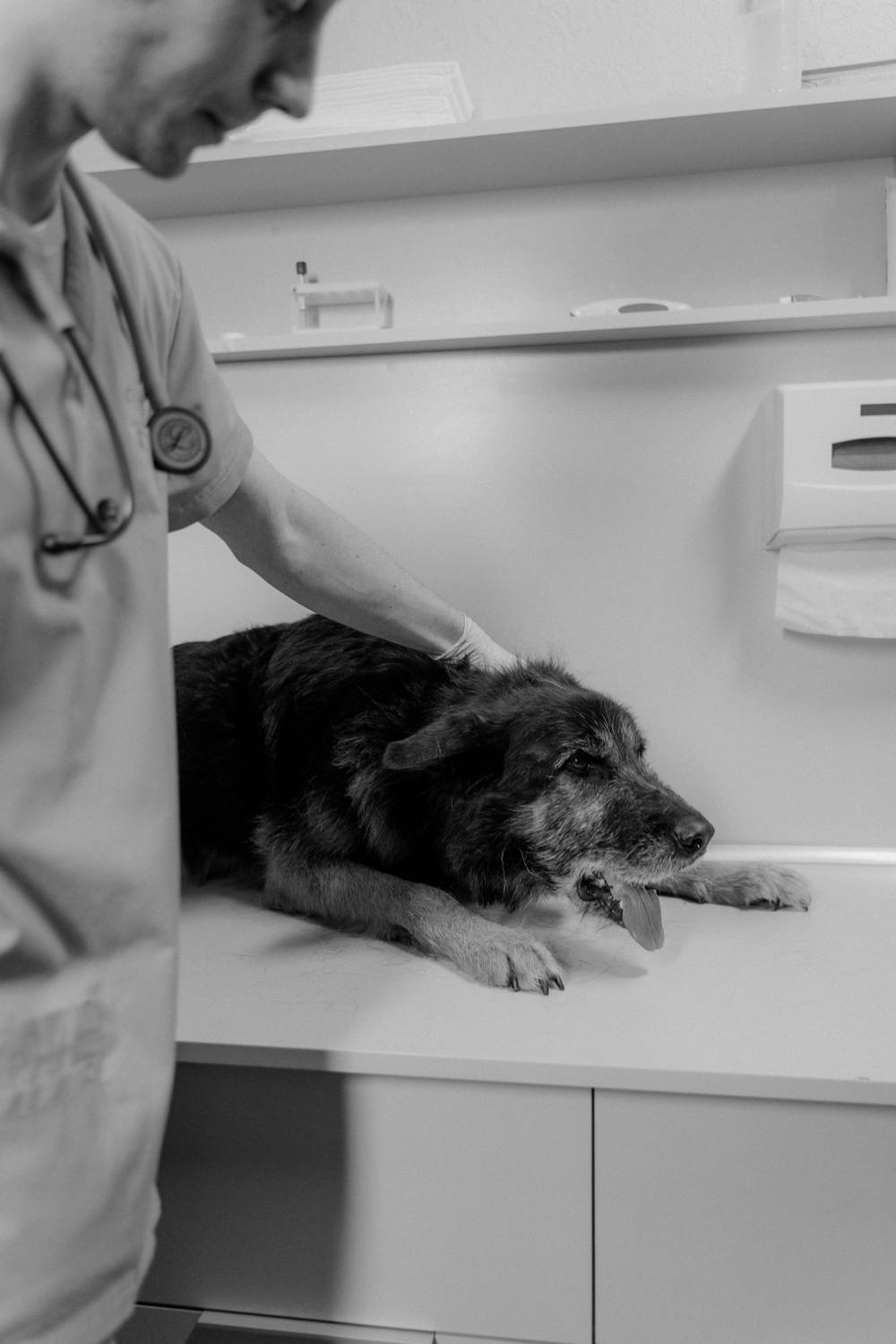
Middle-aged and senior pets carry higher diabetes risk — routine checkups catch it earlier.
The warning signs
The "big four" apply to both species, and they're the ones to actually memorize:
- Excessive thirst — noticeably emptying the water bowl faster or asking to go out more
- Increased urination — more frequent trips outside, more litter box clumps, or accidents from a previously house-trained pet
- Weight loss despite normal or increased appetite — the body can't use the calories it's taking in
- Lethargy or a drop in energy — less interest in walks, play, or jumping
A few species-specific quirks worth knowing: up to half of diabetic cats actually eat less, not more. [1] Diabetic cats may also start walking flat-footed on their hocks instead of up on their toes — a subtle but telling sign of diabetic nerve changes. Diabetic dogs, on the other hand, are prone to sudden cataracts and vision changes. [1][7]

Cats often show subtler signs than dogs — reduced activity and appetite changes are easy to miss.
When it's an emergency
If signs progress and you see vomiting, loss of appetite, extreme lethargy, or labored breathing, don't wait for a routine appointment — that combination can point to diabetic ketoacidosis (DKA), a life-threatening complication that can turn fatal within 24–48 hours without treatment. [1]
🚨 Any one of the "big four" signs on its own warrants a vet visit within the week. Vomiting, loss of appetite, or extreme lethargy together warrants one today.
Why daily eyes on your pet actually matter
This is the part that doesn't get talked about enough: most of these early signs are things you only notice if you're around your pet enough to know their baseline. A dog who's suddenly drinking more water on a Tuesday walk, or a cat who's stopped jumping up onto the windowsill — those are easy to miss if you're gone 10 hours a day, and easy to catch if someone's checking in.
It's one of the quiet reasons I built daily drop-ins and consistent walking routines into how I work with clients in Largo — not just for exercise and bathroom breaks, but because seeing a pet every day means noticing the small stuff before it becomes the big stuff. If something looks off, you'll hear about it from me, not find out three months later at a vet visit.
The bottom line
Diabetes in pets is common, increasingly common, and very manageable — but only when it's caught early. Know the big four signs, understand your pet's personal risk factors (weight, breed, age), and don't wait out unusual thirst or weight loss hoping it resolves on its own. When in doubt, a quick vet visit and a blood glucose test settles it in minutes.
Need a hand with your pet?
Dog walking, drop-in visits, overnight care, and more — serving Largo, Belleair, and Clearwater.
🗓️ Book Online NowOr call/text (727) 386-6349
Sources
- Jacquie Rand, The Conversation, Dogs and cats get diabetes too. Here's what to look out for and how to manage it (Dec 26, 2024) — prevalence rates, Type 1 vs. Type 2, risk factors, warning signs, remission rates, euthanasia statistics. theconversation.com
- Patterson Veterinary, The Prevalence of Pet Diabetes in the United States — lifetime incidence estimates (1 in 300 dogs, 1 in 230 cats) and decade-over-decade rise. pattersonvet.com
- PMC / National Institutes of Health, Current Understanding of Feline Diabetes: Part 1, Pathogenesis — feline diabetes incidence range of 1 in 100 to 1 in 400. pmc.ncbi.nlm.nih.gov
- ScienceDirect, Canine and Feline Diabetes Mellitus: Nature or Nurture? — ~28% of canine diabetes cases linked to pancreatic damage from chronic pancreatitis. sciencedirect.com
- Merck Veterinary Manual, Acromegaly in Cats — hormonal causes of severe insulin resistance in cats. merckvetmanual.com
- Cornell University College of Veterinary Medicine, Riney Canine Health Center, Managing canine diabetes — breed-specific diabetes risk in dogs. vet.cornell.edu
- American Animal Hospital Association (AAHA), Diabetes in Dogs and Cats: Signs, Symptoms, Diagnosis — clinical signs, diagnosis process, cataract risk in dogs. aaha.org
- Association for Pet Obesity Prevention (APOP) 2025 survey, via dvm360 — 59% of dogs and 61% of cats classified as overweight or obese in the U.S. dvm360.com